Lofoten Islands Tours: Trollfjord Cruises, Sea Eagles and the Road to Å
Sea eagles work the updrafts over Raftsundet while your boat slips through a fjord mouth 100 metres wide. Lofoten Islands tours leave Svolvær every day of the year, and every one here books with free cancellation.
Lofoten Islands tours split into two kinds. Boat trips out of Svolvær run $108.72 to $156.36 and take two to three and a half hours into Trollfjord, whose entrance is only 100 metres wide and which no road reaches. Land tours cost more and take the day: $209.04 buys nine hours down the E10 to Reine, Hamnøy, Sakrisøy and Å. What separates the four Trollfjord boats is not the route, which is identical, but whether you sit outside on a RIB at speed or inside a heated saloon.
Key takeaways
Most booked by a distance: the silent hybrid-electric cruise at $156.36, 4.8 from 3,503 reviews, with the engine cut inside the fjord.
Cheapest way into Trollfjord: the family-run covered boat at $108.72 for three hours, run by Go2Lofoten out of Svolvær harbour.
Short on time: both two-hour RIB safaris cost $125.40 and get you back on the quay before lunch.
No rental car? The nine-hour minivan tour reaches Å and back for $209.04, which is what a week of car hire costs in a day.
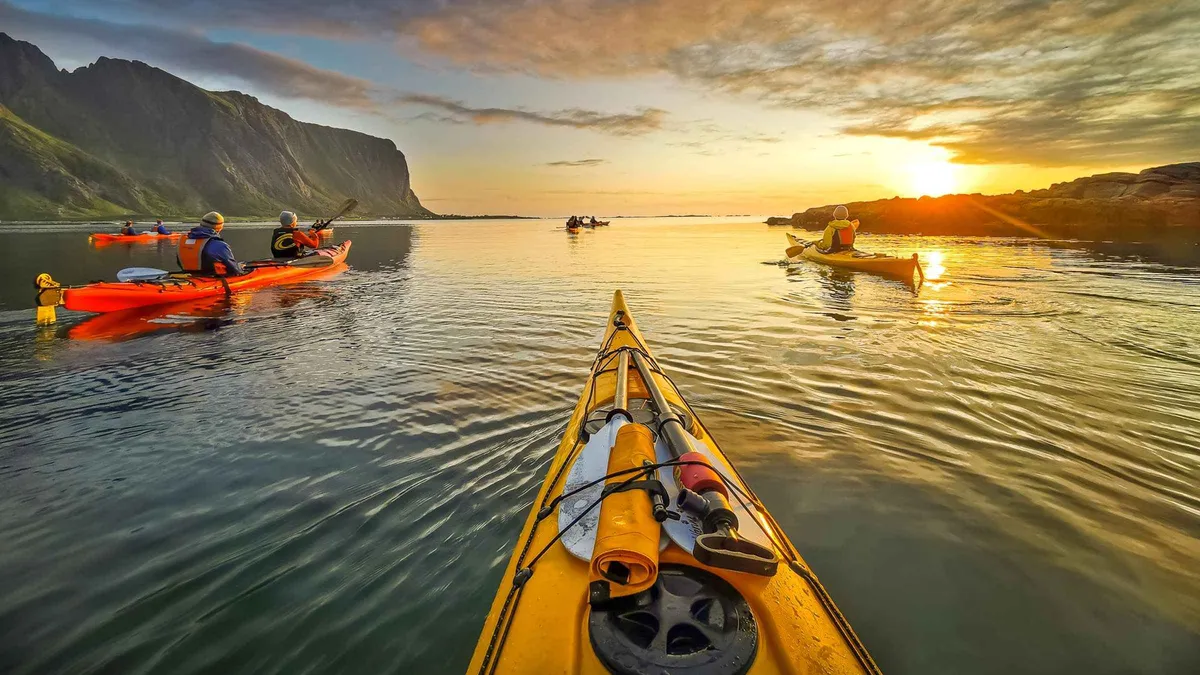
Kayaking under the midnight sun at Eggum only works from about 25 May to 18 July, and nothing replaces it the rest of the year.
Free cancellation up to 24h
Reserve now, pay later
English-speaking guides
Departures from Svolvær quay
100 mWidth of the Trollfjord entrance
2.65 mSea eagle wingspan
25 May – 18 JulMidnight sun in Svolvær
from $108.72Trollfjord cruise, per person
most reviewed
The boat almost everyone books
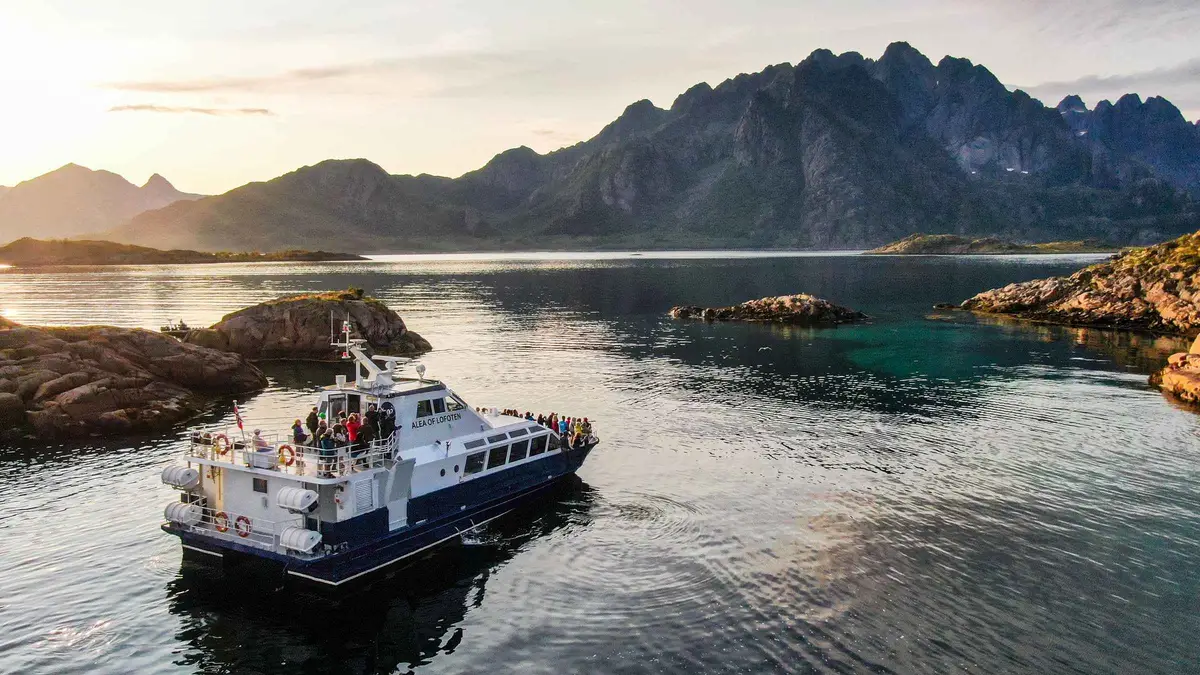
Silent Trollfjord Cruise from Svolvær by Hybrid-Electric Catamaran
★★★★★★★★★★4.8(3,503 reviews)
A classic Lofoten adventure with a modern twist, experience Lofoten’s majestic Trollfjord and its white-tailed eagles in silence and comfort on board our purpose-built hybrid-electric boat.
Duration
3.5 hours from Svolvær
Best Time
Runs year-round; May to September for green mountains, October to March for the dark
Every Lofoten Islands Tour We Rate, and What Each One Is For
Four of these six run the same route from Svolvær up Raftsundet and into Trollfjord. Read the boat, not the itinerary: two hours in a flotation suit on an open RIB and three and a half hours in a heated saloon are different days out, and they cost within $48 of each other.
from $156.36Most reviewed — 3,503
Silent Trollfjord Cruise from Svolvær by Hybrid-Electric Catamaran
★★★★★★★★★★4.8(3,503 reviews)· 3.5 hours
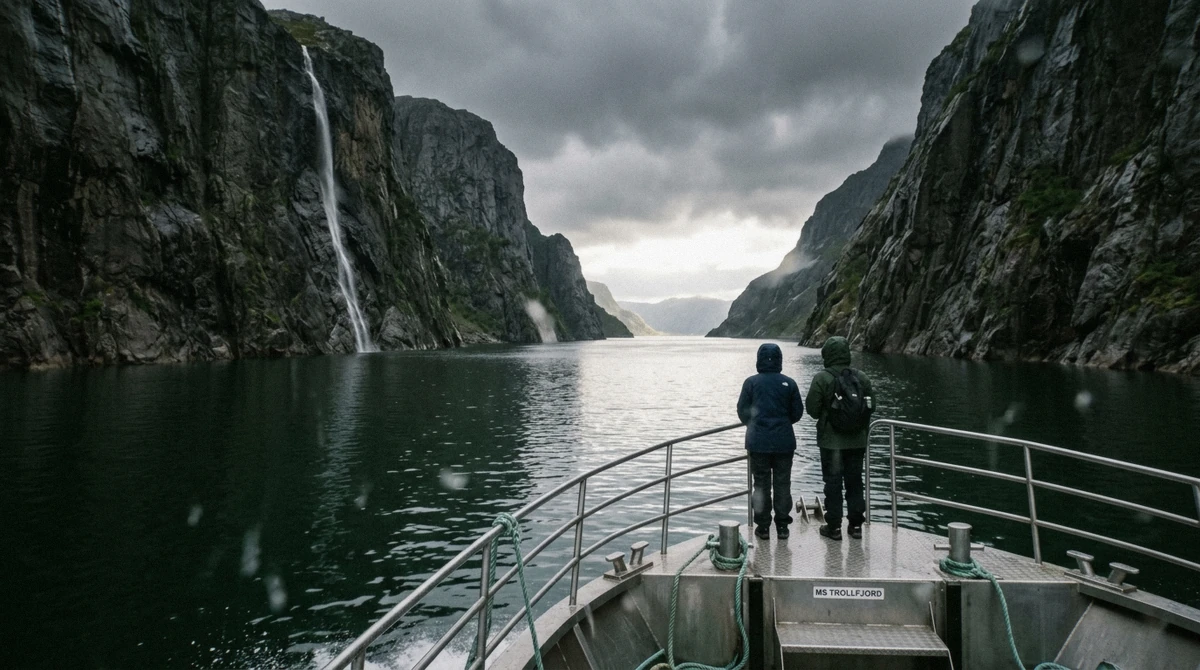
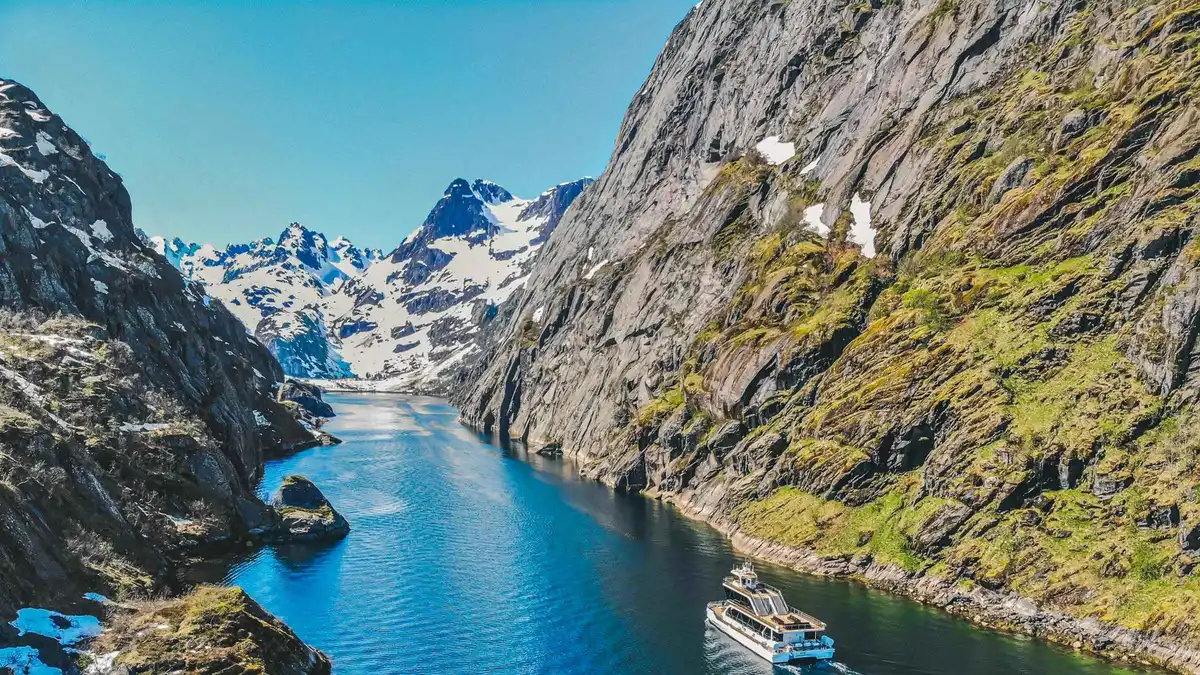
Brim Explorer's purpose-built catamaran runs on battery inside the fjord, so the engine noise stops and you hear the water off the walls. Three and a half hours, heated saloon, outdoor decks, and the only Lofoten boat with an underwater drone feed.
Trollfjord Cruise & Sea Eagle Safari with a Lofoten Family Operator
★★★★★★★★★★4.6(171 reviews)· 3 hours
Go2Lofoten is a local family business running a covered boat, three hours out of Svolvær, with the area's history told on the way. The lowest price on this page and the calmest ride of the Trollfjord group.
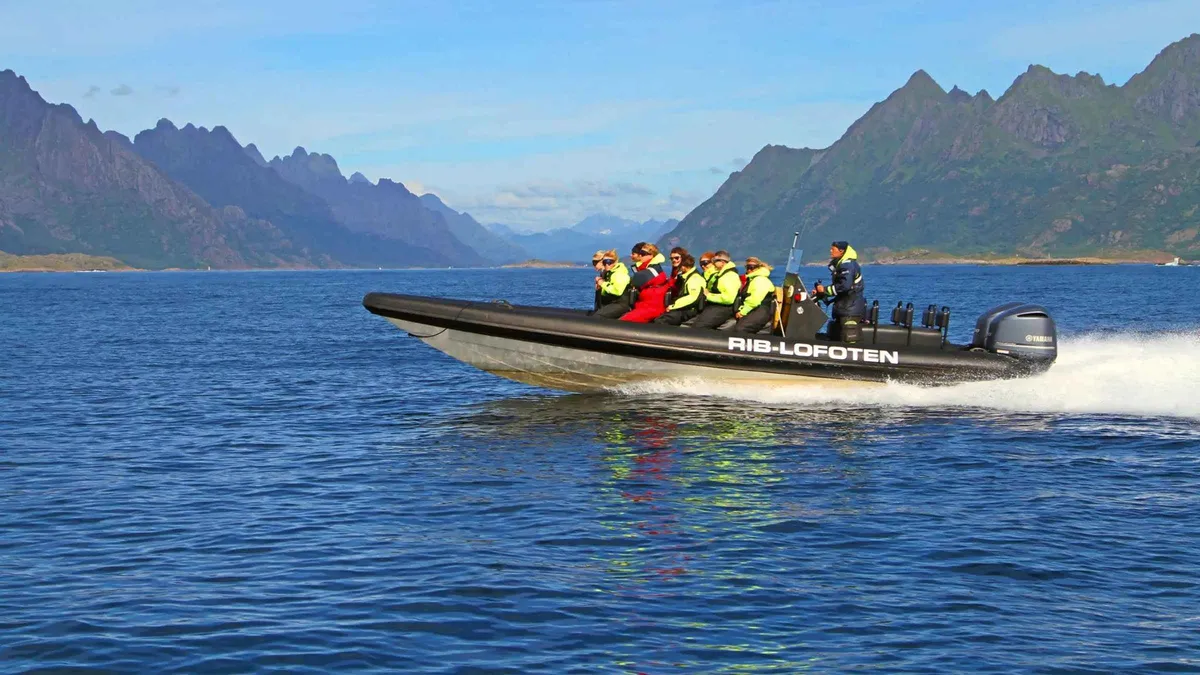
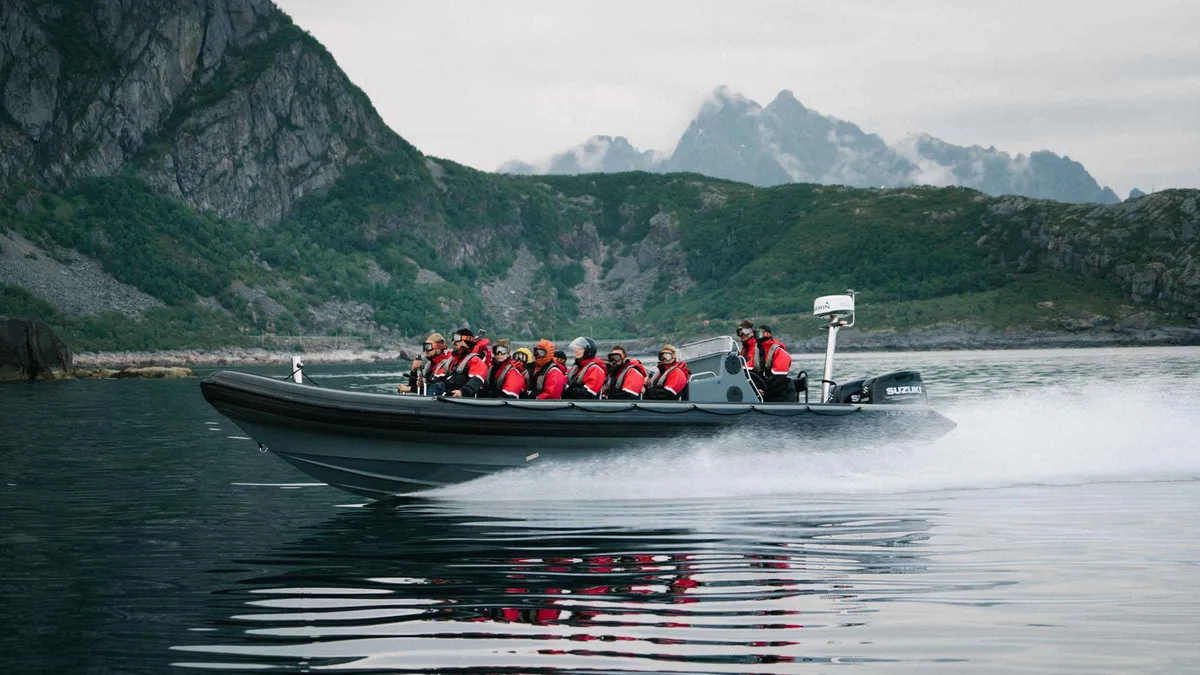
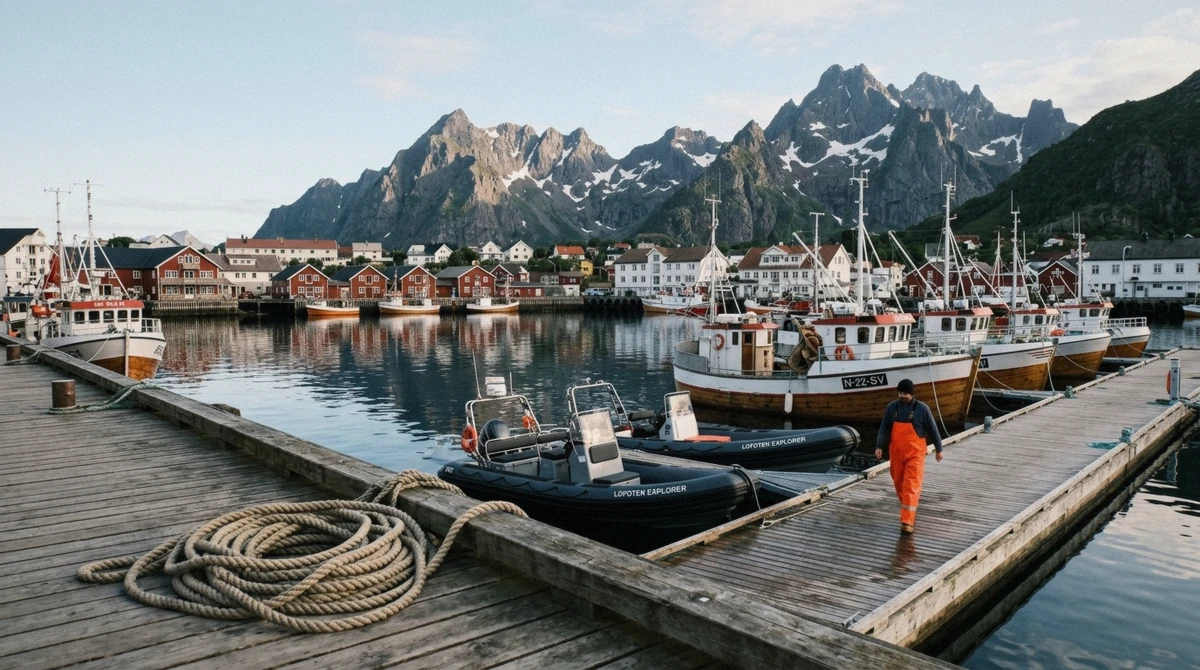
A rigid inflatable that covers Raftsundet at speed, with flotation suits handed out on the quay in Svolvær. You sit outside the whole way, which is the point: the eagles come in low over an open boat.
The same two-hour RIB run into Trollfjorden, with the strongest rating of the fast boats across 887 reviews. Steep walls, beaches on the way out, and enough speed that the fjord arrives before you are cold.
Full-Day Lofoten Road Trip: Reine, Hamnøy, Sakrisøy & Å
★★★★★★★★★★4.8(146 reviews)· 9 hours
Nine hours down the E10 in a small minivan from Svolvær or Leknes, with a local guide on headsets and stops at the four villages every photographer comes for. The one tour here that gets you to the far end of the archipelago without a rental car.
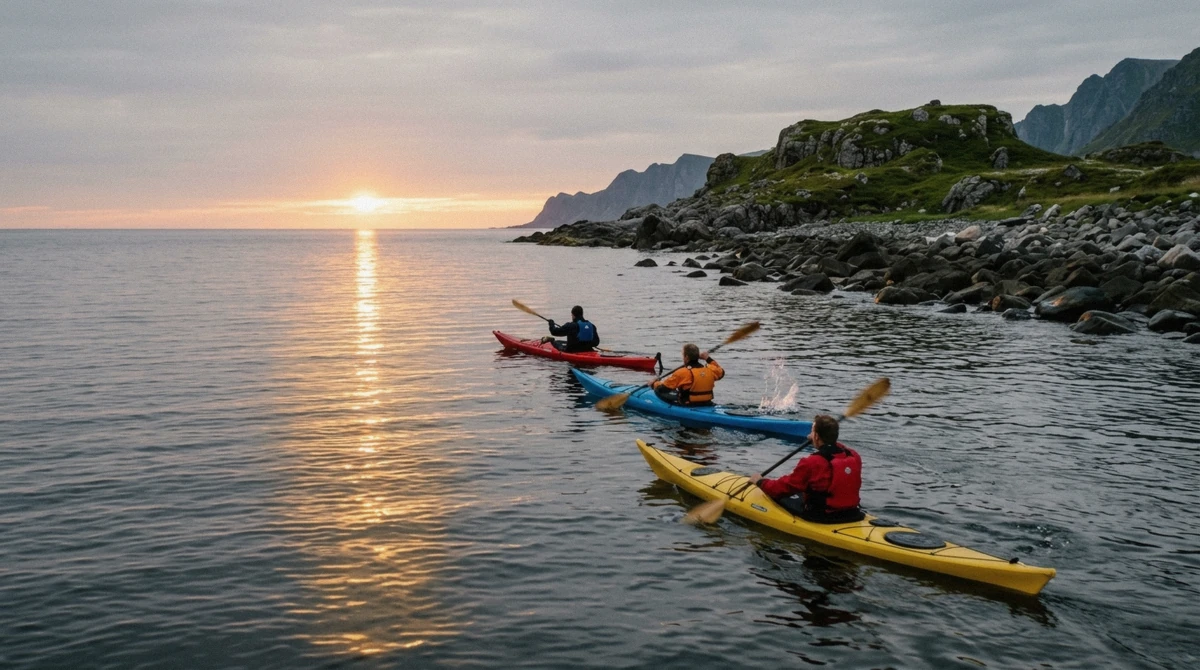
Three hours on open Atlantic water on Vestvågøy's northwest coast, timed so the sun drops to the horizon and climbs again while you are on it. Rated 4.9 across 406 reviews, and the only tour on this page that cannot run outside the midnight-sun window.
Six tours, 6,214 reviews between them, and the numbers say something the marketing copy does not.
3,503Reviews on the silent cruiseMore than the other five tours on this page put together. It has been running out of Svolvær far longer than the newer RIB operators.
4.6 to 4.9The whole rating spreadNothing here is badly run. The 4.6 belongs to the cheapest boat, and the two 4.9s belong to a RIB and a kayak trip.
$48Gap across the Trollfjord boatsFrom $108.72 for the covered family boat to $156.36 for the hybrid catamaran, for the same fjord on the same water.
2 vs 9Hours, shortest to longestA RIB safari and a full-day minivan run bracket everything else. Plan the rest of your day around which one you pick.
1 hourSvolvær to the fjord mouthRoughly what the covered boats take to reach Trollfjord. The RIBs cover the same water in half that.
Year-roundTrollfjord departuresThe boats sail through the polar night as well as the midnight sun. Only the kayak tour has a closed season.
What a Lofoten Islands Tour Actually Covers
Trollfjord is small, and that is the whole point
Trollfjord runs two kilometres into Austvågøya off the Raftsundet strait, and where it meets that strait the opening measures about 100 metres across. Walls of 600 to 900 metres stand on both sides. On a covered boat the skipper slows to a crawl at the mouth because the turn is tight, and the sound of the engine drops away against rock that close.
No road goes there. Trollfjord can only be reached by boat, or on foot by a rough 10 km hike over broken ground that almost nobody attempts. That single fact is why four of the six tours here are boats leaving the same harbour: there is no self-drive version of Trollfjord, and no bus stop at the end of it.
The eagles are the other half of the ticket
Raftsundet and Trollfjorden hold one of the densest white-tailed eagle populations in Europe. The bird has a wingspan reaching 2.65 metres, which is the largest of any bird of prey in northern Europe, and the skippers know where the pairs nest.
On the RIB tours the crew throws fish and the birds come down within a few metres of an open boat, low enough that you stop reaching for the camera and just watch. From a covered deck the same approach happens further off and through glass unless you go outside. Neither operator can promise a sighting, and in heavy rain the birds sit it out, but on a normal summer morning you will see several.
What you pass on the way out
The run east from Svolvær is not dead time. The boats leave past Svolværgeita, the two-horned rock spire above the town that climbers jump between at the top, and out into Vestfjorden with the Lofoten Wall standing to the south: a hundred kilometres of peaks that look, from a distance, like one unbroken ridge.
Skrova comes up on the right, a small island with a whaling station history and a permanent population under two hundred. Then Raftsundet narrows between Austvågøya and Hinnøya, the water goes flat and dark, and the skipper starts scanning the ridgelines for eagles. Most people spend that stretch outside regardless of the weather.
On the way back the light has usually turned. Summer departures in the evening put the low sun behind the peaks the whole return leg, which is why the late slots book out before the mid-morning ones do.
Why every boat leaves from Svolvær
Svolvær is the largest town in Lofoten, sits on Austvågøya at the eastern end of the archipelago, and has the harbour closest to Raftsundet. Everything with an engine and a schedule works out of the quay there, which is a five-minute walk from the bus stop and about ten minutes from the airport.
If you are staying in Reine or Å, at the far western end, budget two hours of driving each way to make a two-hour RIB safari. Several visitors book a Svolvær boat on their arrival or departure day for exactly that reason.
The land tour covers what the boats cannot
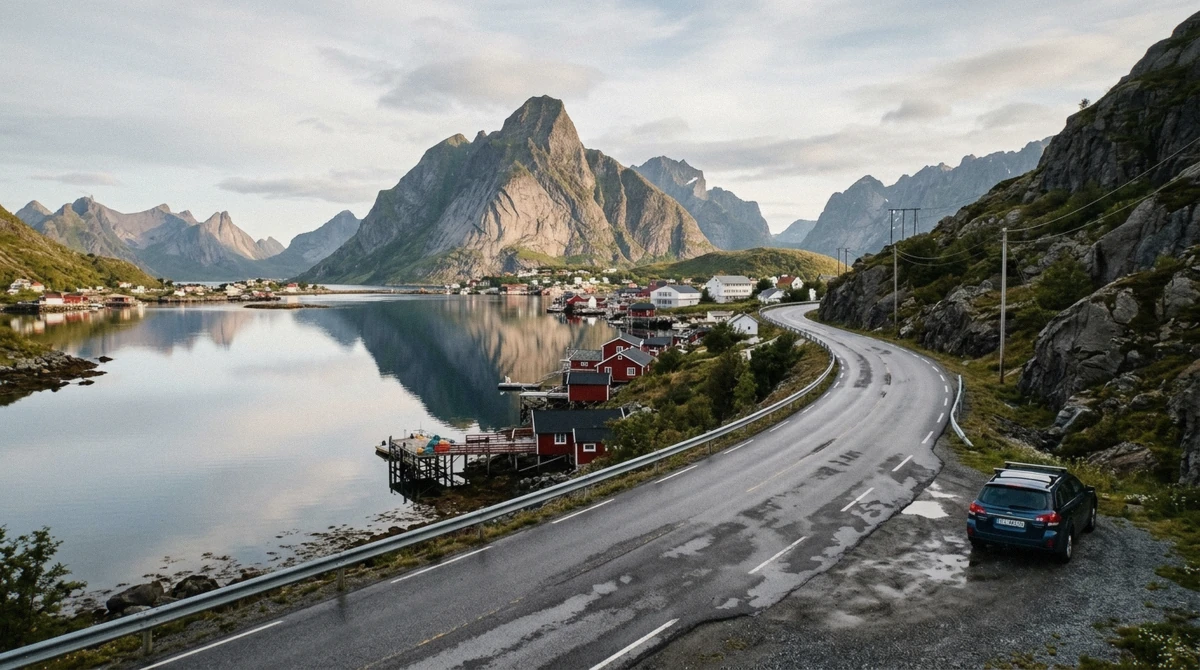
The nine-hour minivan run west is the only tour here that reaches the postcard villages. Reine sits under Reinebringen on Moskenesøya, Hamnøy has the bridge every photographer stands on, Sakrisøy has the yellow rorbuer, and Å is where the E10 stops at a stockfish museum and a bakery.
With headsets in a small van, the guide talks the whole way, and the stops are short because the distance is long. It costs $209.04, which reads steep next to a $125.40 boat until you price a week of car hire against one day of it.
RIB, Covered Cruise or Hybrid-Electric
The route into Trollfjord does not change. What changes is the hull under you, and everything you feel for those two to three and a half hours follows from it.
Boat
Time out
Price here
What you get
Trade-off
Open RIB
2 hours
$125.40
Speed, flotation suit supplied, eagles at eye level over an open deck
Wind and spray the whole way, and no shelter if the weather turns
Covered local boat
3 hours
$108.72
Seats indoors, commentary on the area's history, the lowest price on the page
Slower out, and the wildlife stays further off
Hybrid-electric catamaran
3.5 hours
$156.36
Battery power inside the fjord, heated saloon, outdoor decks, panoramic glass
The longest trip and the highest fare of the three
Sea kayak (Eggum)
3 hours
$115.43
Your own boat on open Atlantic water under the midnight sun
Summer only, and weather cancels it more often than any motorboat
Prices are per person as listed on GetYourGuide on 6 August 2026. All four run as small groups; the RIB operators hand out flotation suits at the quay.
Getting to Lofoten, and Whether You Need a Car
Flying in: Bodø is the hinge
Lofoten has two airports, Svolvær (SVJ) at the eastern end and Leknes (LKN) in the middle, and both are served by short Widerøe hops from Bodø that take about 25 to 30 minutes. Bodø connects to Oslo several times a day, so most people fly Oslo–Bodø–Svolvær and land twenty minutes from the boat quay.
The other way in by air is Harstad/Narvik Evenes, which takes bigger aircraft and often cheaper fares, then two and a half hours of driving on the E10 to Svolvær. If the Evenes fare saves you less than the car hire and the fuel, take the Bodø route.
The ferry is free if you walk on
The car ferry from Bodø to Moskenes takes about three to three and a half hours and lands you five minutes from Reine. Foot passengers and cyclists ride free and do not need a reservation; you turn up at the quay and walk on. Vehicles pay: a car under six metres costs 605 NOK and an electric car 424 NOK in 2026, roughly $63 and $44 at 9.53 kroner to the dollar on 6 August 2026.
In July the vehicle queue is the problem, not the fare. Cars without a reservation get left behind at peak sailings, and a paid reservation covers only a small block of spaces per departure. If you are walking on, none of this touches you.
Bus 300 runs the whole archipelago
The Lofotekspressen, bus 300, follows the E10 from Å through Leknes and Svolvær and on to Narvik, twice a day in each direction. It is the spine of public transport here and it works, but it is a long-distance coach, not a local shuttle: two departures a day means a missed connection costs you six hours.
Roadworks in Svolvær have moved the town stop to Lofotgata, next to the Coop Extra at the Alti shopping centre, so check where the bus actually calls before you stand at the old stop with luggage.
Route
How
Time
Cost
Bodø → Svolvær or Leknes
Widerøe flight
25 to 30 min
Varies by season
Bodø → Moskenes
Car ferry
3 to 3.5 hours
Free on foot; 605 NOK for a car under 6 m
Evenes airport → Svolvær
E10 by car
About 2.5 hours
Toll-free road, fuel only
Å → Svolvær → Narvik
Bus 300
About 4 hours Svolvær to Narvik
Two departures a day each way
Leknes → Reine
E10 by car
1h10 driving, 2 hours in summer
60 km
Do you need a car, honestly
For a Svolvær-based trip with boat tours, no. The quay, the bus stop, the airport and most hotels sit inside a small town, and every tour here except the Eggum kayak leaves from that harbour.
For the western villages, yes, or a tour that does the driving. A small rental hatchback runs roughly 7,000 to 11,000 NOK a week in Norway, about $735 to $1,155, and in high season the Lofoten depots empty out months ahead. Set that against $209.04 for the nine-hour minivan and the maths only favours the car if you are staying long enough to use it several days.
The E10 itself is free. The Lofast link to the mainland carries no toll, and the road is a series of bridges and tunnels through the middle of the islands with pull-offs at the obvious viewpoints.
Lofoten Month by Month
The boats sail all year. What changes is the light, the cod fleet in the harbour, and how many other people are standing on the Hamnøy bridge.
JanuaryPolar night ends, aurora peaksThe sun returns to Svolvær around 5 January. Cold, dark and the strongest northern-lights odds of the winter. Boats run; dress for it.
FebruaryLofotfisket and the skrei fleetThe cod arrive from the Barents Sea and so does the fishing fleet. Harbours are full, drying racks go up, and daylight is back to six hours.
MarchLight and aurora togetherTwelve hours of daylight by month's end while the aurora season still runs. Snow on the peaks, sea eagles active, the best trade-off of the winter.
AprilQuiet shoulder, cheap bedsThe cod season winds down and the summer crowds have not arrived. Weather is unsettled; the RIB is a cold seat this month.
MayGreen returns, midnight sun startsThe midnight sun begins around 25 May in Svolvær. Roads clear, the villages wake up, and prices have not peaked yet.
JuneRound-the-clock daylightThe sun never sets. Kayak tours at Eggum run at 22:00 and finish in full light. Book anything popular well ahead.
JulyPeak season, peak queuesThe busiest weeks of the year. Ferry car queues, full car parks at Reine, and the last midnight sun around 18 July.
AugustWarmest water, first dark nightsSea temperatures top out and the nights start returning at the end of the month. Hiking conditions are at their best.
SeptemberAurora season opensDark enough for the northern lights again from early in the month, with autumn colour on the mountainsides and far fewer visitors.
OctoberStorm season beginsWet and windy. Boat cancellations pick up, so leave a spare day in the itinerary if a Trollfjord trip matters to you.
NovemberShort days, low pricesA few hours of blue light around midday. Accommodation is at its cheapest and the fjord is empty of other boats.
DecemberPolar nightThe sun stays down in Svolvær from about 7 December to 5 January. Not darkness all day, but a long blue twilight around noon.
Where the tours go
Every boat on this page leaves the quay in Svolvær, runs east into Raftsundet and turns into Trollfjord. The minivan tour goes the other way, west down the E10 to the end of the road.
SvolværDeparture quay for all four boat tours
RaftsundetThe strait the boats cross; eagle territory
Trollfjord2 km long, 100-metre entrance, no road
EggumKayak launch on the northwest coast of Vestvågøy
Reine and HamnøyPhoto stops on the nine-hour minivan tour
ÅEnd of the E10, stockfish museum, turnaround point
Svolvær to Trollfjord is about an hour by covered boat and half that by RIB. Svolvær to Å is roughly 130 km of E10.
What people write afterwards
★★★★★★★★★★
The silence when they switched to electric inside the fjord was the best part. You hear waterfalls you would never notice over a diesel engine. Warm inside, and staff who actually knew the birds.
Claire · United Kingdom, July 2026
★★★★★★★★★★
Fast, cold and brilliant. The suits keep you warm enough but bring a hat, and the eagles came so close on the way back that nobody bothered with their phones.
Daniel · Germany, June 2026
★★★★★★★★★★
We paddled at eleven at night with the sun still up over the sea. Small group, patient guide, and calm water at Eggum. Worth planning the trip around.
Sofie · Denmark, June 2026
Quotes come from the GetYourGuide listings for the tours on this page.
Eggum faces northwest across open ocean, which is why the midnight-sun kayak tour launches there and not from a sheltered harbour.
Reading these tours before you book one
The route is identical, the boat is not
Four of these six tours run the same water from Svolvær into Trollfjord. Choosing between them is choosing between an open RIB at speed and a heated saloon at half that speed, and no operator will tell you which one suits you.
The cheapest option is not the weak one
Go2Lofoten's covered boat is $108.72, the lowest price here, and carries a 4.6 rating across 171 reviews. It is a family business with a smaller marketing budget, not a worse day out.
Reviews reward the RIBs and the kayak
The two 4.9 scores on this page belong to a RIB safari and the Eggum kayak tour. People who choose to be outdoors and cold tend to rate the experience higher than people who booked comfort.
Two hours costs you a morning, nine costs you a day
A RIB run leaves the rest of the day open in Svolvær. The minivan tour to Å eats it entirely, which is fine if you have four days here and awkward if you have two.
Weather cancels, and Lofoten weather turns fast
Operators cancel for wind rather than rain. Book the tour that matters most on your first full day so a cancellation leaves a spare day to rebook into.
Free cancellation is the real hedge
Every tour listed here cancels free up to 24 hours ahead. Book the date you want as soon as you have flights and adjust later, rather than waiting for a forecast that will change anyway.
Costs, the Visitor Levy and What to Bring
Is there a tourist tax in Lofoten in 2026?
Not yet, and the reporting on this has been muddled. Norway's Visitor Contribution Act took effect on 1 July 2026 and allows municipalities to charge up to 3 percent on paid overnight stays, with cruise calls to follow once the rules cover them. Several travel outlets read that as Lofoten charging visitors from summer 2026.
What the Lofoten Council actually agreed is different. The municipal councils vote on local regulations in September 2026, and the target for the first collection is 1 January 2027, run either by each municipality or through a shared arrangement. Seventy percent of the revenue stays where it was collected, thirty percent goes to regional projects.
When it starts, it applies to hotels, guesthouses and short-term rentals, not to tours or boat tickets. People sleeping in their own campervan, tent or boat are exempt. For a 2026 trip nothing is added to your bill; for 2027 budget about 3 percent on top of accommodation in Vågan, Vestvågøy, Flakstad and Moskenes.
What a few days here actually costs
The tours are the fixed part and the cheapest part to plan. Boat trips run $108.72 to $156.36, the kayak is $115.43 and the full-day minivan is $209.04, per person, with free cancellation on all of them.
Around that, Norway prices land hard. A rental car is 7,000 to 11,000 NOK a week, about $735 to $1,155. The Lofotr Viking Museum at Borg charges 265 NOK for adults and 170 NOK for children aged 6 to 15 in high season, roughly $28 and $18, with lower rates off-season. Car ferry crossings from Bodø are 605 NOK for a standard car and 424 NOK for an electric one, though walking on costs nothing.
Accommodation swings more than anything else. A rorbu cabin in Reine in July and the same cabin in November are different propositions financially, which is the strongest argument for a shoulder-season trip.
What
Price NOK
Price USD
Notes
Trollfjord boat tour
—
$108.72 to $156.36
Per person, free cancellation 24h ahead
Full-day minivan to Å
—
$209.04
Nine hours, small group, headsets
Bodø–Moskenes ferry, car under 6 m
605 NOK
About $63
Foot passengers free, no booking needed
Bodø–Moskenes ferry, electric car
424 NOK
About $44
Zero-emission discount
Lofotr Viking Museum, adult
265 NOK
About $28
170 NOK for children 6 to 15
Rental car, one week
7,000 to 11,000 NOK
$735 to $1,155
Small hatchback, books out months ahead in summer
What to wear on a boat above the Arctic Circle
The Gulf Stream keeps Lofoten far milder than its latitude suggests, but you are on open water with the wind over the bow. RIB operators supply full flotation suits, which handle the wind and most of the spray. What they do not supply is what goes under them.
Gloves and a hat matter more than a heavier jacket, because the suit covers your body and not your hands or ears. Sunglasses are worth carrying in summer even when it looks overcast; the light off the water at midnight is stronger than people expect. On the covered boats none of this is critical, though the outside decks are where the eagles are.
Warm hat and gloves, on every boat tour, every month
Windproof layer under the flotation suit if you are on a RIB
Sunglasses from May to August, including late evening
Waterproof phone pouch or a strap; people lose phones over the side
Sturdy shoes for the minivan tour, which involves short walks at each village
Seasickness tablets taken an hour ahead if Vestfjorden crossings bother you
When the weather cancels, and what happens next
Operators here cancel for wind, not for rain or cold. A forecast above roughly 12 to 15 metres per second in Vestfjorden puts the RIBs on the quay, and swell at the mouth of Raftsundet will stop a covered boat before the wind does. October through March produces most of it, but a summer low can shut the fjord for two days in July as easily as in November.
When a trip is cancelled by the operator you are refunded in full through the platform, and the crew will usually offer the next available departure first. What nobody refunds is the flight you booked around it, which is the argument for putting the boat on your first full day rather than the last.
The practical version: book the tour you most want early in the trip, keep the following day loose, and if the forecast collapses across your whole stay, take the covered boat over the RIB. It sails in conditions that ground the inflatables.
How many days you need
Two full days covers Svolvær and one boat tour with room for weather. Four covers the drive west to Reine and Å with a day spare, which is the length most people wish they had booked.
If you are down to a single day, take a two-hour RIB in the morning and spend the afternoon in Henningsvær, which is 25 kilometres from Svolvær and easier to reach than the western villages. A day trip to Å and back from Svolvær without a guide is a lot of driving for what you see.
What to do with the days between tours
Henningsvær is 25 kilometres from Svolvær on a chain of bridges and islets, and it holds a working harbour, a handful of galleries and the football pitch that photographers shoot from the hillside above. It is the easiest half-day out of Svolvær with or without a car.
West of Leknes the landscape opens up. Haukland and Uttakleiv are white-sand beaches on the north coast of Vestvågøy, about 25 minutes apart on foot over the headland. Kvalvika, further west, needs a 45-minute walk in over a saddle and rewards you with a beach nobody drove to. The Lofotr Viking Museum at Borg sits between them and rebuilds an 83-metre chieftain's longhouse found under a farmer's field.
On Moskenesøya, Reinebringen is the view you have seen a hundred times: a Sherpa-built stone staircase of roughly 1,500 to 2,000 steps climbs from the E10 to a ridge above Reine. It is steep, it is popular, and it is genuinely dangerous in autumn storms or wet snow, when the stone turns slick. Å, at the very end of the road, keeps a stockfish museum, a working bakery in an old boathouse, and the drying racks that carry Lofoten's real export.
Henningsvær, 25 km from Svolvær, harbour village and the famous pitch
Haukland and Uttakleiv beaches on Vestvågøy, 25 minutes apart on foot
Kvalvika beach, a 45-minute hike in from the Fredvang side
Lofotr Viking Museum at Borg, 265 NOK adults, reconstructed 83-metre longhouse
Reinebringen above Reine, a stone staircase of roughly 1,500 to 2,000 steps
Å at the end of the E10, stockfish museum and the drying racks
Two categories. Boat tours from Svolvær into Trollfjord and Raftsundet, which run all year and cost $108.72 to $156.36, and land tours west along the E10 to Reine, Hamnøy, Sakrisøy and Å, which take a full day and cost $209.04. Summer adds sea kayaking, including the midnight-sun trip at Eggum. The multi-day guided packages you see advertised for Lofoten are a different product: six to ten days, accommodation included, priced in the thousands.
How do you get to the Lofoten Islands?
Fly to Bodø, then either a 25 to 30 minute Widerøe flight to Svolvær or Leknes, or the three-and-a-half-hour car ferry to Moskenes, which is free for foot passengers. The alternative is flying into Harstad/Narvik Evenes and driving about two and a half hours on the E10, or taking bus 300 from Narvik.
When is the best time to visit the Lofoten Islands?
Late May to mid-July for the midnight sun, which is up continuously in Svolvær from about 25 May to 18 July. February and March for northern lights with enough daylight to see the islands, and February also brings the skrei cod fleet. September gives you aurora, autumn colour and far fewer people. The month-by-month breakdown covers the trade-offs.
What is the best way to see the Lofoten Islands?
By water for the parts a road cannot reach, and by road for the villages. Trollfjord has no land access at all, so a boat is the only way in. The western villages need either a car or a guided day tour like the nine-hour minivan run to Å. Most short trips combine one of each.
Do you need a tour to visit Lofoten, or can you do it yourself?
You can drive the E10 yourself and see most of the villages. You cannot reach Trollfjord without a boat, and no scheduled service goes there, so the fjord is the one part of Lofoten that requires a tour. Without a rental car, a guided day tour is also the practical way to reach Reine and Å from Svolvær.
How much does a Lofoten Islands tour cost?
Boat tours from Svolvær cost $108.72 to $156.36 per person. The cheapest is the covered family-run cruise, the most expensive the hybrid-electric catamaran. Sea kayaking is $115.43 and the full-day minivan tour is $209.04. All include free cancellation up to 24 hours before departure.
Which Trollfjord cruise is best, RIB or covered boat?
The RIB if you want speed, open air and eagles at close range, and you can handle two hours of wind. The covered boat if you want to sit indoors, hear commentary and stay warm. The hybrid-electric catamaran is the compromise: heated saloon, outdoor decks, and the engine cut inside the fjord. Prices sit within $48 of each other.
Do Lofoten tours run in winter?
Yes. The Trollfjord boats sail year-round, including through the polar night from about 7 December to 5 January. Winter cancellations come from wind rather than cold or darkness. Only the kayak tour has a genuine closed season. What runs in winter lists what stays open and what closes.
Can you see the northern lights on a Lofoten tour?
On the right dates, yes. Aurora season runs from roughly September to early April, and a boat away from harbour lights is a good place to be under a clear sky. No operator guarantees it, and the daytime Trollfjord departures are not aurora tours; book an evening slot in winter if that is the goal. The northern lights page covers the season, the beaches and how many nights to book.
Where do Lofoten day tours start from?
Svolvær for every boat tour on this page, from the quay in the town centre, a few minutes from the bus stop and about ten minutes from Svolvær airport. The full-day tour to Å picks up in Svolvær or Leknes, and the kayak tour launches at Eggum on the northwest coast of Vestvågøy.
Do you need a car in the Lofoten Islands?
Not for a Svolvær-based trip built around boat tours. For the western villages, either a car or a guided day tour. Rental runs about 7,000 to 11,000 NOK a week and depots sell out months ahead in summer, while bus 300 covers the E10 twice a day in each direction.
Where should you stay in the Lofoten Islands?
Svolvær if you are here for boat tours, since everything leaves from its harbour and it has the airport and bus connections. Reine or Hamnøy if the western landscape is the reason you came, accepting a two-hour drive to reach the Svolvær quay. Henningsvær sits between the two and stays busy year-round. Full breakdown by area: where to stay in Lofoten.
Is there a tourist tax in Lofoten?
Not on a 2026 trip. Norway's visitor levy law took effect on 1 July 2026, but the Lofoten municipalities vote on local rules in September 2026 and aim to start collecting on 1 January 2027. When it starts it will be up to 3 percent on paid accommodation, not on tours, and campers in their own van, tent or boat are exempt.
How many days do you need in Lofoten?
Two full days for Svolvær and one boat tour with a weather buffer. Four to add the drive west to Reine and Å without rushing. One day is enough for a two-hour RIB safari and an afternoon in Henningsvær, but not for the far end of the archipelago. Day-by-day plans for two, four and seven days are on the itinerary page.
Is Trollfjord worth it if I have already seen other Norwegian fjords?
The scale is different from Geiranger or Nærøyfjord, and so is the experience. Trollfjord is short, two kilometres, and tight enough that the boat turns around inside it with walls close on both sides. You are not looking at a fjord across a valley; you are inside a slot in the rock. If your last fjord was seen from a cruise-ship deck, this is the opposite of that.
Can children go on the Lofoten boat tours?
The covered boats suit families best: seats indoors, a toilet on board and no wind in your face for two hours. The RIB safaris hand out flotation suits in children's sizes and set their own minimum ages, so check the age on the listing before booking. The nine-hour minivan tour is a long day for small children, though the stops break it up.
Is the midnight sun kayak tour hard if I have never kayaked?
It is a beginner tour with a guide, but it launches into open Atlantic water at Eggum rather than a sheltered bay, so it cancels for swell more often than a fjord paddle would. Three hours, stable sea kayaks, and a 4.9 rating across 406 reviews. If the forecast is marginal, expect the guide to move or scrub it rather than push out.
What is Lofotfisket and can you see it?
It is the winter cod fishery that built these islands. Skrei spawn off Lofoten from late January into April and the fleet follows them; harbours fill with boats and the wooden racks go up for drying. The 2026 Barents Sea quota was cut 16 percent to 285,000 tonnes, so there are fewer boats than a decade ago, but February and March still put the working side of Lofoten in front of you.
Do the tours run if it rains?
Yes. Rain alone does not stop a departure here, and the crews hand out waterproofs or full flotation suits depending on the boat. Wind and swell are what cancel trips. If it is raining hard, take the covered boat: from a RIB you spend two hours with water coming at you horizontally.
Trollfjord has no road, no bus and no viewpoint you can drive to. The boats from Svolvær are the whole of it.
 Lofoten Islands Tours
 from $156.36
Most reviewed — 3,503
from $156.36
Most reviewed — 3,503